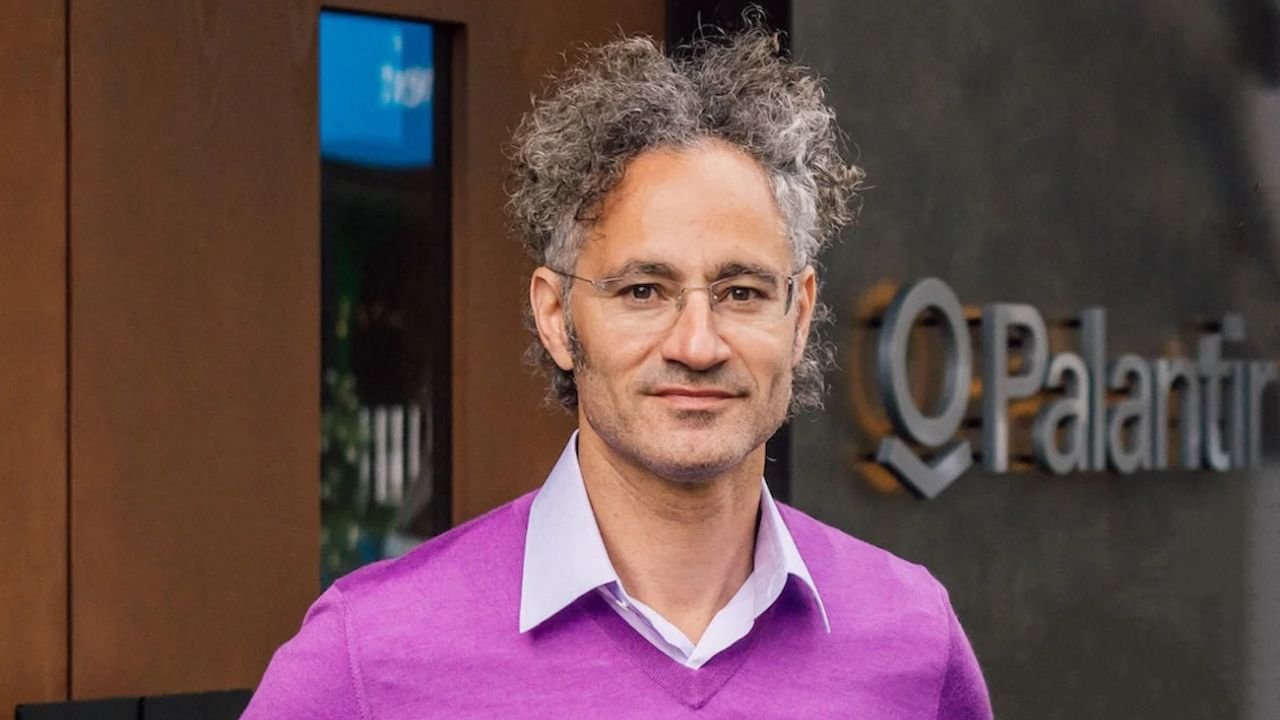
Palantir Founder: The Story, Influence, and Controversies Behind Palantir
A technology company does not become one of the most discussed names in politics, defense, immigration, and artificial intelligence by accident. Over the past 20 years, Palantir has developed software that helps organizations and governments analyze vast volumes of data. Some are aware of the company due to its contracts and controversial events, but other people would like to know the people who established it and what ideas guided it to develop. The company is the focus of many of those big conversations, which has led to greater interest in Palantir founder. Surveillance and related issues about national security, military technology, artificial intelligence, and data privacy circles are all likely to bring up Palantir. There are individuals who consider the company to be an innovative technology leader. Some reckon that its software puts too much control on institutions to handle individual information. To understand why Palantir attracts so much attention, it helps to look beyond headlines and examine what the company does, who created it, how its technology works, and why it continues to generate strong opinions around the world.
Palantir Founder: The Early Vision Behind the Company
The story of the palantir founder begins in 2003 when a group of entrepreneurs decided to tackle a growing challenge. Organizations were receiving enormous volumes of information and the majority of this information was still in different systems. Meaningful connections could be time and resource-intensive to find.
The founders were convinced that software would help in solving that issue. They did not emphasize consumer apps or entertainment platforms; instead, they have ensured that they emphasized the area of data analysis and intelligence. They wanted to develop systems that could realize patterns that human beings would overlook when studying information manually.
The investors were the initial ones in the company, and they shared that advanced analytics would be more valuable going forward. With the spread of digital records in governments and businesses, the need for advanced analytical tools has grown as well.
Key People Behind the Company
| Founder | Role |
| Peter Thiel | Co-founder and investor |
| Alex Karp | CEO and public leader |
| Joe Lonsdale | Business strategist |
| Nathan Gettings | Technical contributor |
| Stephen Cohen | Engineering leader |
Though the company is identified with a single person by many, Palantir was formed as a result of the joint efforts of multiple founders who brought various abilities and experiences into the project.
Founder of Palantir: Why Peter Thiel Receives So Much Attention
When people search for the founder of Palantir, Peter Thiel often appears first. His fame is not restricted to Palantir since he once assisted in the creation of PayPal and then became one of the most well-known investors in Silicon Valley. Thiel was influential in supporting Palantir in its infancy. His background in technology and finance also assisted the company in developing credibility when advanced analytics was still a rather niche area. Nonetheless, dwelling on Thiel, one can create a one-dimensional picture. The success of Palantir was due to several founders and executives who influenced the creation of the technology, the business strategy, and the long-term vision.
A case in point is Alex Karp, the face of the company, who has remained the head of the organization up to now as the CEO. The type of leadership that he has is something different as compared to other executives in the field of technology, since he often talks about geopolitical matters, national security and the future of artificial intelligence. That duality of powerful founders assisted Palantir in establishing a level of identity in the field of technology.
What is Palantir?
Palantir is a software company that creates software designed to arrange, relate and analyse bulk data. The company is not a social media network or a consumer application, but is involved in assisting organizations to process complex information. Its software collects data across various sources and processes it in a form where users will be able to discern relationships, trends and patterns. These tools are utilized by governments, businesses, healthcare systems, manufacturers, and defense organizations to aid in decision-making.
The name “Palantir” comes from the seeing stones featured in J.R.R. Tolkien’s fantasy stories. Those stones allowed users to observe distant events, which reflects the company’s goal of helping organizations gain deeper visibility into large amounts of information.
Main Software Platforms
| Platform | Primary Function |
| Gotham | Intelligence and government operations |
| Foundry | Commercial business analytics |
| Apollo | Software management and deployment |
| AIP | Artificial intelligence integration |
These products represent the basis of the business of Palantir and why companies in various industries implement its technology.
Why Organizations Use Palantir
The lack of a connected information system remains an issue in many institutions. Records in one department might be stored in a single database, while another group operates a totally different software. The solution to that issue that Palantir tries to implement is to centralize information. Consequently, the users will be able to browse through information more effectively and make their decisions because of a further comprehension of the available information.
Palantir History Timeline
The rise of Palantir is an indication of the growing significance of data analytics and artificial intelligence. What had been initially an expert software firm came to be one of the most debated technology businesses in the world.
| Year | Milestone |
| 2003 | Palantir founded |
| 2004 | Early platform development |
| 2008 | Expansion into government contracts |
| 2014 | Increased international adoption |
| 2020 | Public market debut |
| 2023 | Artificial Intelligence Platform launched |
| 2026 | Continued expansion across defense and commercial sectors |
What Does Palantir Actually Do for Governments and Businesses?
The company develops software that integrates data from various sources and transforms that information into actionable information. Palantir does not substitute current databases, but makes an amalgamation of the databases into one functioning view.
Take the case of a hospital that expects to cope with the care of patients at a time when there is a high influx or request. Data related to personnel, ratings, gear stock, patient data, and bookings might be stored in different systems. The software in Palantir is able to integrate those datasets and assist administrators in detecting issues faster. The same applies to a wide range of industries.
Real-World Example
Consider a large transportation company managing hundreds of vehicles across different regions. There can be drivers and maintenance teams, dispatch centers and logistics departments that can be separate sources of information. In the absence of a centralized system, it is hard to detect delays or to detect problems with the operations. Through linking those records, analytics software can be used to identify patterns that can be used to enhance efficiency and lower expenses. This connectivity of information is one of the key reasons why organizations invest in state-of-the-art data platforms.
Industries Using Palantir Technology
| Industry | Common Applications |
| Healthcare | Resource planning and operations |
| Finance | Fraud detection and analytics |
| Manufacturing | Supply chain management |
| Transportation | Logistics optimization |
| Defense | Intelligence support |
| Energy | Infrastructure monitoring |
As artificial intelligence becomes more important, many organizations view integrated data systems as a competitive advantage.
Palantir Co Founder’s Strategy for Data-Driven Decision Making
The original Palantir co-founder team believed information should support better decisions rather than simply sit inside databases. The company was affected by this philosophy in their products development. Palantir also did not come up with simple reporting features and instead, it was interested in assisting users in making sense of intricate situations using interconnected data.
Event, location, individual and organizational relationship explorations offer possibilities to users. It has been found useful by institutions that handle large and complex datasets. The development of the company implies that numerous organizations are of the opinion that data is more useful when it is capable of uncovering significance.
Key Ideas Behind the Company’s Approach
- Connect information from different systems.
- Reduce time spent searching for data.
- Improve operational awareness.
- Support faster decision-making.
- Use analytics to identify patterns.
These principles continue to influence Palantir’s software strategy.
Why Palantir Faces Criticism Over Military and Surveillance Contracts
Few topics generate more controversy around Palantir than its military and government partnerships. The opponents claim that the software produced by the company is used in military activities and monitoring systems, which may influence the lives of civilians. The application of highly-developed analytical tooling in conflicts and security operations often raises questions by human rights advocates.
Criticism towards Palantir has been directed, in particular, at its connections with military bodies and governments that engage in constant conflict. They think technology companies ought to be subjected to more scrutiny whenever their products are abetting the activities that can help in enhancing violence or human rights issues.
Proponents have an alternative view. They claim that governments need high-tech technology to counter security threats, safeguard national interests and enhance operational effectiveness. The debate ultimately centers on a larger question. How should society balance security, technology, and accountability?
Why the Debate Continues
| Supporters Say | Critics Say |
| Improves security operations | Expands surveillance capabilities |
| Enhances decision-making | Raises privacy concerns |
| Supports defense efforts | Can contribute to harmful outcomes |
| Increases operational efficiency | Requires stronger oversight |
These disagreements have become even more visible as artificial intelligence gains a larger role in military and security systems.
Who is Peter Thiel? The Entrepreneur Behind Palantir’s Rise
Peter Thiel remains one of the most recognizable figures connected to Palantir. He was successful with PayPal before he joined the company. He subsequently became a venture capitalist and invested in some of the biggest technology firms. His political, economic and technological opinions are often the focus of media attention. His readiness to defy the traditional notions is appreciated by admirers. His standpoints and the statements he makes to the world are usually opposed by critics. Irrespective of his point of view, his contribution to the initial development of Palantir is substantial. His network, financial backing and experience assisted in the company’s building in its initial years.
The Relationship Between Palantir and the Trump Administration
Palantir often appears in political discussions because of its government contracts and connections to influential figures. News media and political journalists have pointed to connections between those individuals close to Palantir and affiliated with different administrations, as well as in the political network of Donald Trump.
Such relations have stirred up some controversies concerning technology corporations, state regulation, and citizen responsibility. Some critics point out that close ties between strong companies and the government should be looked into. According to the proponents, numerous technicians collaborate with governmental bodies and such collaboration is not unusual in an industry with specific software and service offerings.
Can Organizations Reduce Their Dependence on Palantir?
People who oppose Palantir’s activities often focus on advocacy, public awareness campaigns, and institutional accountability. Critics are urging organizations, universities, hospitals and government entities to cautiously consider their engagements with their technology vendors. They think that transparency enables the communities to learn more about how information is gathered, examined, and utilized. There are those in favor of stricter rules on surveillance technology and artificial intelligence. They are trying to help establish measures that will safeguard privacy and still allow innovation to proceed.
Those who believe in Palantir usually insist on responsible regulation over the usage of technology and not over individual companies. Both perspectives notwithstanding, the involvement of the people is an important component of the discussion. There will be more debates concerning technology, privacy and security because the data-driven systems will become more powerful.
Conclusion
The story of the palantir founder goes beyond the creation of a software company. It symbolizes the increasing impact of information, artificial intelligence, and technology in decision-making today. Since its inception in 2003, up to the present time when it has transformed into a big player in the analytics sector, Palantir has influenced debate regarding security, privacy, and novelty. Regardless of whether individuals admire the company or doubt its practices, the history of the company, its leadership, and technologies can be used to find an answer as to the reason why Palantir has remained one of the most influential names in the world of technology.
Read More Information:


